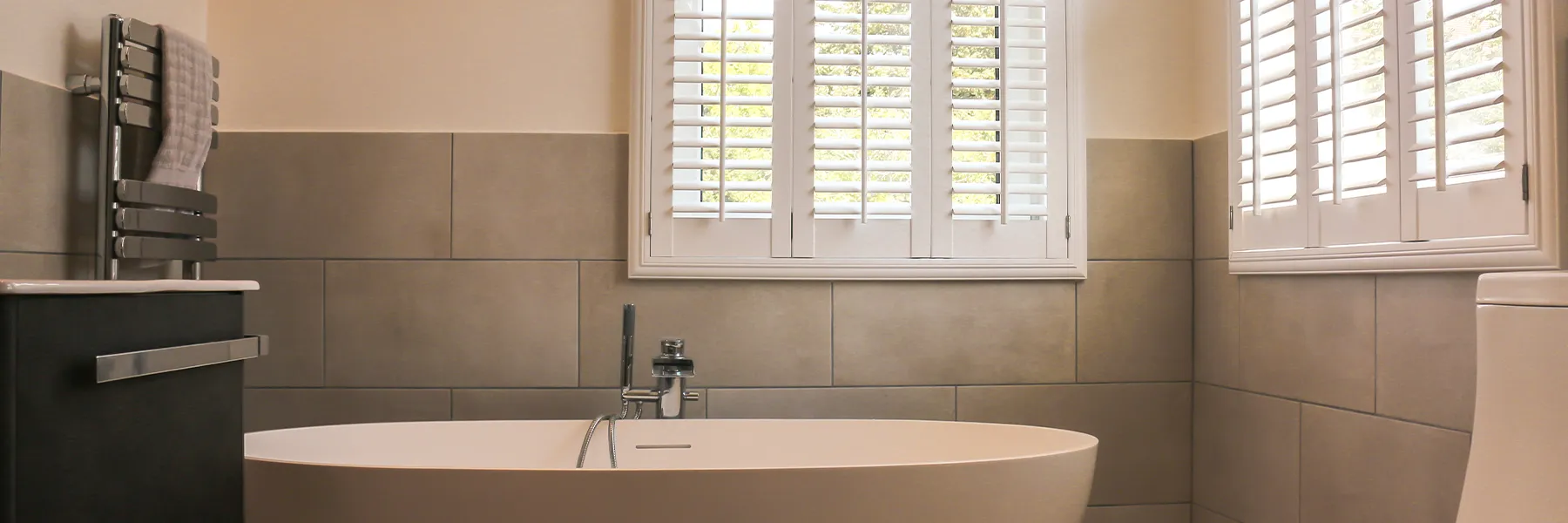
Interested in fitting shutters in your home? Wood shutters and PVC shutters/faux wood shutters are a popular choice of window treatments for many homes.
We often receive questions from our customers asking which type of shutter material is best for their home.
So in this guide, we’re exploring the differences between wood shutters and PVC faux wood shutters, and answering the question – “Are wood shutters or faux wood shutters better for your home?”
At The Shutter Studio, we offer both wood and PVC vinyl shutters, each with its own advantages for your interiors. Ultimately, the choice comes down to personal preference, guided by insights from our surveying team. Let’s take a closer look at the differences:

Wooden shutters
Being wooden shutter experts, we will always favour the quality and craftsmanship of our materials at The Shutter Studio, especially our Monterey Pine and our sustainable Basswood. Both are exceptional choices for shutters and have been trusted within the carpentry and shutter industry for many years.
Advantages to wood shutters
Great insulators
Wood is a natural insulator, and so fitting wooden shutters vs PVC shutters will keep your home much warmer than a plastic alternative.
This will not only regulate the temperature of your home but also reduce energy bills. How effective are shutters at doing this? Well, experts at The English Heritage “states estimated heat losses by conduction and radiation through the window as a whole can be reduced by 50-60%, by using shutters”.
Versatile & Freedom
While PVC faux wood shutters are available in a range of painted finishes, wood shutters offer complete freedom of choice for style and appearance.
Our real wood shutters can be painted, with certain hardwoods available with a selection of stains to enhance the natural wood look and grain of the wood shutters. If you’re debating between wood shutters vs faux wood shutters, and want full freedom of choice over your interior design, the feel and look of the hardwoods create a dressing like no other.
Lighter in Weight
Hardwood can be very light in weight when compared to polyvinyl shutters. This means that wooden shutters are likely to last longer due to less weight on the hinges.
This also makes them a lot easier to install as they can be designed and installed to fit the exact shape and style of your windows.
Window shutters are proven to increase curb value and enhance the appearance of your home. If you’re interested in fitting custom, wooden shutters or faux wood shutters to your home, The Shutter Studio is proud to offer flexible payment options, with made-to-measure, high-quality shutters that are surprisingly affordable.
Disadvantages to wooden shutters
Cannot be removed easily
All shutter styles share this feature, but because the frames are sealed and caulked into your window recess, they can’t be removed as easily as a typical blind or curtain.
They are also made bespoke to your windows, so if you ever moved house, it is unlikely you would be able to take them with you, but an advantage to this is that they would add value to your old property.

The Flexible
Alternative: Blinds
Binds are versatile, budget-friendly, and designed to fit your lifestyle.


Shutting down wooden shutter misconceptions
A few misconceptions about wooden shutters are that they fade over time and they are hard to maintain and keep clean, but at The Shutter Studio, our shutter experts can easily shut down these myths with simple advice.
Aren’t wooden shutters more expensive?
While wooden shutters were traditionally more expensive than PVC faux-wood options, that’s no longer necessarily the case. Our high-quality PVC (premium poly) shutters are designed to be durable, long-lasting, and suitable for high-impact environments like bathrooms, making them comparable in price to real hardwood. The cost of any shutter – whether wood or PVC, really depends on factors like the tilt system, your window size, and other customisations.
What is the best thing to clean shutters with?
Using a dry microfibre cloth regularly over the slats and frames can easily remove that unwanted dust from your panels. As wooden shutters are not waterproof, we recommend that you avoid any water or cleaning chemicals and just use baby wipes if you have any mucky fingerprints.
We also finish every shutter with a protective coating that protects them from fading over time, and any cleaning chemicals used on or around your shutters could damage this over time.

Poly shutters/Faux wood shutters
Poly Vinyl Shutters (also known as Faux Wood shutters, PVC shutters, and plastic shutters) are a great option if you’re interested in fitting shutters to your home.
PVC faux wood shutters are ideal for rooms prone to high moisture, humidity, and condensation. Our faux wood shutters are fully waterproof, making a great addition to our range and your home.
In fact, many customers opt to add PVC shutters/faux wood shutters to their bathrooms, kitchens, and utility room windows, where the luxurious and elegant style of shutters is desired, without the worry of warping or water paint damage that hardwood shutters may be prone to.
Advantages to PVC Shutters and Faux Wood Shutters:
Waterproof shutters
PVC faux wood shutters are a great fit for rooms that attract moisture and condensation due to being completely water-resistant.
At The Shutter Studio, we dress the shutters with stainless steel hinges, which are also waterproof, so that no rusting will occur to the features of your shutters. These panels are designed for the toughest of environments and will not warp when exposed to dampness, unlike wood.
Cleaning these shutters is much easier if you get them wet, but we still recommend you avoid those harsh chemicals, as they are still finished with a protective coating.
Pairing hardwood shutters in your living room, bedrooms, and conservatories with PVC faux wood shutters in moisture-prone rooms is a great way of achieving a long-lasting and consistent look throughout your home.
Aluminium reinforced
Our PVC faux wood shutters are one of the strongest and most durable shutter options in our range. As the shutters are aluminium reinforced, the faux wood panels are less likely to chip or dent very easily.
This means that they are a perfect choice for busy family homes, where little ones may choose to explore once they get big enough.

Disadvantages of PVC faux wood shutters:
Heavier in weight
Compared to light hardwoods, PVC is quite heavy, which could add pressure on the hinges over time, especially on larger panels.
If you are choosing between wooden shutters and faux wood shutters, our shutter experts will always make sure the best material is chosen for the correct placement of shutters, for example, doors and shaped products.
Not as insulating as wooden shutters
If you are looking for an energy-efficient window dressing, then PVC shutters may not be the choice for you. As we mentioned, wood is a natural insulator and absorbs heat, creating a warmer interior during the colder months.
Poly faux wood shutters will still add an insulating layer to your home, but might not be as effective as wooden shutters.
Less design choice
Poly faux wood shutters are available in a range of painted colours, though stains are not an option.
Certain features, such as hinge type, also require consideration, as stainless steel hinges are recommended for their waterproof properties. Because the poly panels are heavier, they may not always be suitable for larger windows, but your consultation will ensure the best solution for your space.
Poly may never have the authentic wood feel within your home, but it doesn’t mean it should be completely off your list when it comes to choosing the perfect shutter for your home. It has very valuable benefits and is very durable, so it will last many years in your property.

What to consider when choosing shutters in 2026
In 2026, homeowners are thinking carefully about style, longevity, and performance. Wooden shutters offer timeless appeal, warmth and character to both period and modern homes. They are a versatile option, with some hardwoods being available in both painted and stained finishes.
PVC shutters provide painted finishes and practical durability, particularly in moisture-prone areas. Both materials can improve comfort by reducing draughts and retaining warmth, although wooden shutters will remain the more effective insulator. A snug, made-to-measure fit ensures your shutters provide maximum insulation while still letting in the right amount of natural light.
In 2026, the focus is less on which material is ‘better’ and more on which is right for your own lifestyle, space and how you use each room. Wooden shutters often suit living spaces and bedrooms, while PVC can be a practical choice for kitchens and bathrooms. Balancing practicality with a consistent look helps to create a cohesive home interior. For more information on styling tips, take a look at our Guide to shutters and blinds styles in 2026.

Combining wood shutters and faux wood shutters
When deciding on which type of shutters to fit in your home, you can achieve the best of both worlds by combining material types.
If you love the craft and style of real hardwood shutters, fitting wooden shutters in your living room, bedrooms, and less moisture-prone rooms is an ideal touch.
PVC faux wood shutters can then be added in a matching style and colour to your kitchens, bathrooms, and utility rooms to add a luxurious touch to your windows, with the durability and resistance to last.
So what material is best for window shutters?
We love both wood and faux wood shutters due to their many benefits and adaptability within properties and certain areas of the home.
Our team can guide you in selecting the right material for your property and provide all the information you need during a home or in-store consultation.
Book your free consultation today. Click here.
For inspiration, you can also keep up to date with our latest news by following us on Instagram, X and Facebook.
Our Recent Writings

Roller Blinds with Light-Blocking Channels: Blackout and Thermal Benefits
Explore how light-blocking channels work with roller blinds to reduce light gaps and improve blackout and thermal performance.

UK-Made Shutters: Choosing Shutters Made in the UK
Discover the benefits of shutters made in the UK, including premium Basswood, made-to-measure fitting, shorter lead times and aftercare.

Autumn Home Ideas: Upgrades to Consider Now
Get your home ready for Autumn with simple home upgrades, from practical improvements, cosy additions and thermal window coverings.